Could a 3D Printer Be Your Child’s Next Big Hobby?
From dragons and fidgets to personalised gifts and useful gadgets, 3D printing can turn a child’s ideas into real objects. If a 3D printer is on your family’s Christmas wish list, here’s what to know before choosing one.
What can children make with a 3D printer?
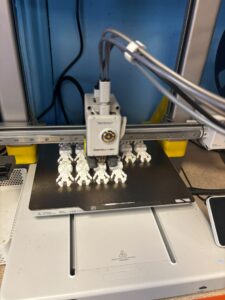
A home 3D printer builds objects layer by layer from a digital design. Children can make dragons, dinosaurs, fidgets, keyrings, pencil pots, phone stands, gaming accessories, simple games and personalised gifts.
There are thousands of designs available online, so beginners can start by printing a ready-made model. As they gain confidence, they can learn to adapt designs or create their own. The fun is not just in the finished object: children can experiment, solve problems and try again when a print does not work as expected.
Is 3D printing good for children?
It can be a rewarding hobby for children who enjoy building, designing, crafts, Minecraft, Lego, coding or finding out how things work. 3D printing can introduce ideas linked to design, technology, maths and engineering, while encouraging creativity, patience and problem-solving.
It will not suit every child, though. Printing can take time, there is software to learn and some projects fail. Think about whether your child enjoys the process of making things – not just the finished toy – before investing in a machine.
What do you need to start 3D printing at home?
At a minimum, you will need a 3D printer, compatible filament (the material used to make the object) and a suitable place to set up the machine. You will also need software to prepare a digital design for printing. With some models you can send prints direct from your phone, for others you’ll need a laptop, particularly if you want to make changes to size or designs.
Some beginner-friendly printers automate parts of the setup and calibration process, which can make getting started less complicated. Check what is included in the box, what software is required and whether the printer needs any additional tools or accessories. Remember to budget for filament as well as the printer itself.
Which 3D printer is best for beginners?
There is no single best 3D printer for every family. The right choice depends on your budget, available space, the size of objects you want to make and how much hands-on setup you are comfortable with.
The Bambu Lab A1 Mini is a compact model to compare if space is limited. The Bambu Lab A1 offers a larger printing area, while the Creality Ender-3 V3 SE is another entry-level option worth researching. These are examples to investigate rather than a definitive ranking: compare current prices, specifications, independent reviews, warranty and what each package includes before buying.
Affiliate link: Explore the Bambu Lab A1 Mini on Amazon
Affiliate link: Explore the Bambu Lab A1 on Amazon
Affiliate link: Explore the Creality Ender-3 V3 SE on Amazon
You may also need filament. PLA is a common material for many beginner projects, but check that the diameter and type are compatible with your chosen printer.
Affiliate link: Explore compatible PLA filament on Amazon
Is 3D printing safe for children?
3D printers have hot components and moving parts, so children need age-appropriate supervision and should follow the manufacturer’s safety instructions. Think carefully about where the printer will be used, keep it out of reach of younger children when necessary, and use materials and settings recommended for the machine. Check the manufacturer’s guidance on ventilation and never leave children to operate equipment beyond their age or experience.
Should you try 3D printing before buying a printer?
If you are unsure whether your child will enjoy the hobby, look for a local workshop, demonstration or beginner lesson. Seeing a printer in action can help children understand the process and decide whether they are interested in designing and making things as well as collecting the finished creations.
A local expert’s advice
Andrew Jenkinson – Owner of Gift & Receive, Sale
 Andrew runs Gift & Receive, a local 3D printing shop and workshop based upstairs at Emporium M33 in Sale. As well as producing personalised gifts and custom 3D prints, Andrew teaches children and adults how to use 3D printers through beginner lessons, workshops and children’s 3D printing parties.
What would you recommend for a family buying its first printer?
For most families, I’d recommend starting with a Bambu Lab A1 Mini or A1. They’re relatively easy to use, produce excellent prints and are great for beginners.
The A1 Mini is a fantastic starting point if you’re working with a smaller budget or have limited space. If you’ve got a little more room and want to print larger objects, the A1 is worth considering.
My advice is not to spend a fortune on your first printer. Start with something reliable, learn how it works and build your confidence before upgrading.”
What’s the biggest mistake beginners make?
Expecting every print to work perfectly first time! 3D printing is brilliant, but things will go wrong. Prints might come loose from the bed, filament might get tangled or a design might not print how you expected.
The biggest mistake is getting frustrated and giving up. Some of the best learning happens when something goes wrong and you work out how to fix it.
I always tell children that a failed print isn’t a failure – it’s an opportunity to learn something new.
What’s one thing parents should know before getting started?
 3D printing isn’t just about downloading toys and pressing print. It can teach children problem-solving, patience, creativity and even basic engineering and design skills.
One of my favourite parts of teaching is watching a child go from printing somebody else’s design to creating something completely from scratch.
Parents should also remember that 3D printers have hot parts and moving components, so younger children need appropriate adult supervision.”
Any other tips you can share?
Before spending money on a printer, I’d recommend trying one out first.
At Gift & Receive, we run beginner 3D printing lessons where children can learn about the printer, understand how designs are made and create their own personalised keyring to take home.
It’s a great way to discover whether 3D printing is something they’ll enjoy before committing to buying a machine.
And don’t worry if you’re not particularly technical yourself. You don’t need to be an engineer to get started!
About Gift & Receive
 Gift & Receive – 3D Printing Shop & Workshops
- Located upstairs at Emporium M33, Sale.
- We offer beginner 3D printing lessons, children’s parties, personalised gifts, custom printing and design services.
- Beginner lessons: From £40
- Children’s 3D printing parties: £30 per child
 Gift & Receive – 3D Printing Shop & Workshops
Website: www.giftandreceive.co.uk
TikTok: @giftandreceiveshop
Is a 3D printer a good Christmas present?
 A 3D printer could be a brilliant Christmas present for a child who loves creating, experimenting and figuring out how things work. It is also a hobby that can develop over time, from printing a simple model to learning digital design.
The best starting point is to match the printer to the child, the family’s budget and the amount of adult support available. Start simple, check the safety guidance and remember to allow for filament and other essentials – not just the machine.
Affiliate disclosure
This article contains affiliate links. If you buy through these links, Raring2go! may earn a commission at no extra cost to you.