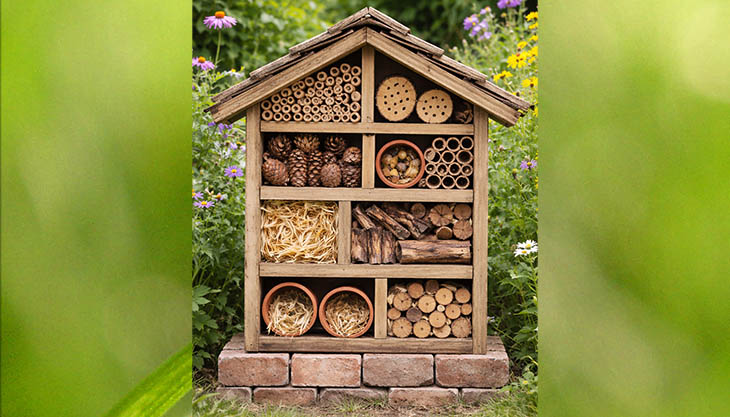
How to Make a Bug Hotel
A bug hotel (also called an insect house) gives shelter to helpful garden insects like ladybirds, solitary bees, lacewings, beetles, and more. These insects help pollinate plants and control pests naturally.
What You Need
You don’t need anything fancy—just natural, recycled materials:
Structure (outer frame)
- Old wooden box, crate, or stack of bricks
- Hollow logs or a wooden pallet
Filling materials (for different insects)
- Hollow stems: bamboo canes, dried sunflower stalks
- Small logs with drilled holes
- Straw or hay
- Pine cones
- Bark
- Dry leaves
- Broken pots or tiles
- Corrugated cardboard
Tools – Always handled by an adult! (optional)
- Hand saw
- Drill (for making holes)
- Secateurs
- Twine/ String
Step-by-Step Instructions
- Choose a Location
- Put the bug hotel in a quiet, sheltered spot.
- Ideally: south or southeast facing to keep it warm, especially for solitary bees.
- Keep it a few inches off the ground to avoid dampness.
- Build the Frame
Use a sturdy shape like:
- A wooden box turned on its side
- A stack of old bricks with holes
- A small crate
This gives your hotel structure and protects the “rooms” inside.
- Create Different “Rooms”
Pack your hotel with a variety of materials. Each type attracts different insects:
- Bees → Bundles of bamboo canes or drilled wooden blocks (holes 3–10 mm wide, 10–15 cm deep)
- Ladybirds → Dry leaves, bark
- Lacewings → Corrugated cardboard rolled up
- Beetles & woodlice → Rotting wood, logs, sticks
- Earwigs → Straw or hay
Make sure materials are dry so mould doesn’t grow.
- Pack It Tightly
Fill the spaces without crushing anything.
Everything should fit snugly so it won’t fall out in wind or rain.
- Weatherproof It
- Add a small slanted roof: a broken tile, a piece of slate, or a board.
- This keeps rain from soaking in.
- Leave It Alone
Insects will move in over weeks or months. Avoid moving or shaking the hotel.
Extra Tips
- Don’t use treated wood (chemicals harm insects).
- Replace materials that get mouldy.
- Add a shallow water dish nearby with pebbles for insects to drink safely.
- Plant flowers nearby—especially native wildflowers and herbs!
Who Might Move In?
- Solitary bees
- Ladybirds
- Lacewings
- Woodlice
- Beetles
- Earwigs
- Spiders (helpful pest controllers too!)