
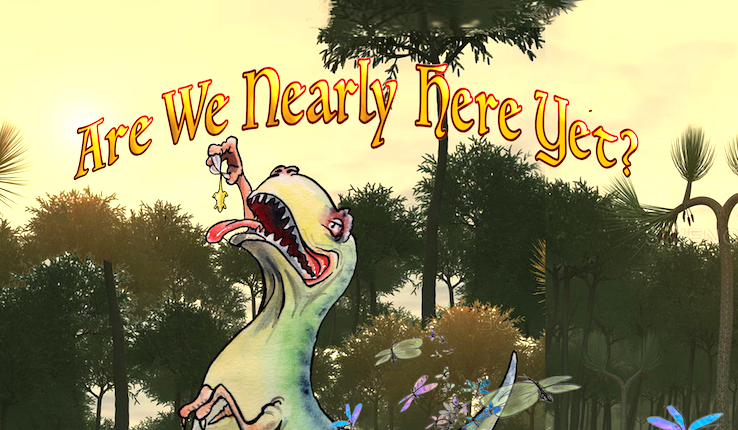
Are We Nearly Here Yet?
When astronauts who have just joined the International Space Station look down at the Earth below, they very often feel deep emotions. They see the World as a single entity, where everything is connected to everything else. The beauty and the fragility of it makes them feel related to all living things. Big thoughts from a little glance! This is known as the ‘Overview Effect’. It is similar to the feelings many people get when they view the course of the universe’s evolution, from the Big Bang to the present.
Are We Nearly Here Yet? is a ZOOM series of 6 sessions for 7-11 year-olds and parents, about the history of the universe. It’s fun – the boring bits have been removed, so it goes at pace – and its mission is to give an overview of the cosmos.
As you fly through the ages, you will learn how everything is connected: how the universe began, 14 billion years ago, how the elements were created, how the Earth formed, how life started, how evolution works, how humans emerged and ranged over the planet and why, sometimes, the world seems a bit wonky.
The chapter recordings give the overview, then Dr Richard Robinson gives extra demos, Powerpoint presentations and challenges to push home the crucial bits of science in short, sharp, slightly-semi-serious slices. Richard was trained in street theatre – he knows how to do this.
Obviously it stars ‘You’, which makes it unique: it’s not a cool survey of the universe; it’s up close and personal – your adventure. You are one atom in a molecule, one microbe in a colony, one of a nest of mice, or a troop of apes, or a tribe, a society or a nation of humans. At every step we see how luck and evolution moved you closer to You, here and now.
Tickets are £14 per screen for the whole series – that’s one pound per million years, per screen, regardless of how many people are watching it. Invite the neighbours, do!
See you on the launch pad (your sofa) on November 2nd
from 4.15pm – 5 pm, Mondays, November 2nd – December 7th
Details on the BrightonScience website…